Why Small Groups Work
One-on-one care builds a beautiful foundation. Big programs offer lots of social time. Small groups — three or four kids — quietly combine the best of both.
Kids Learn Differently from Each Other
Adults teach by explaining. Other kids teach by doing.
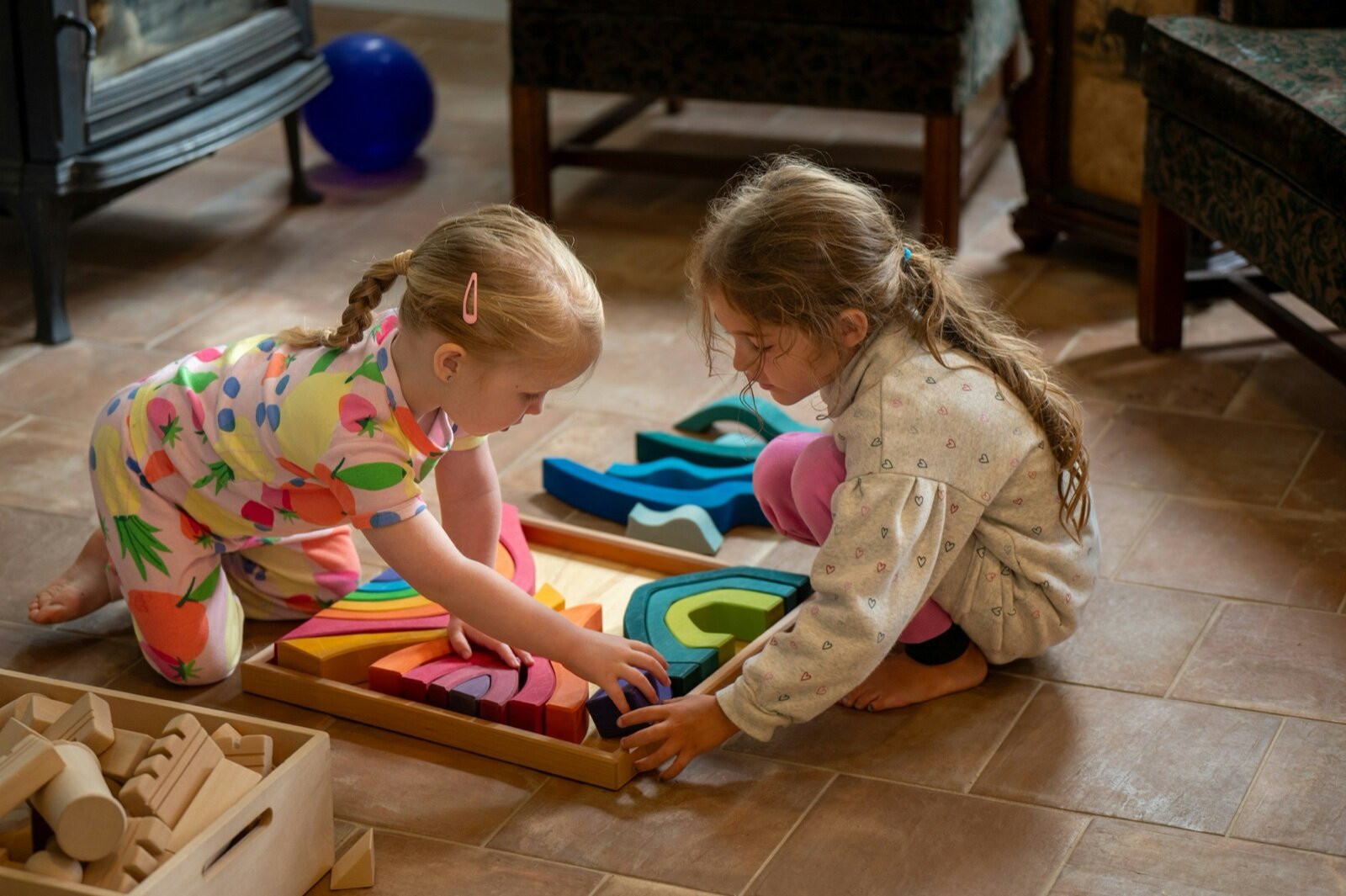
When a four-year-old watches a peer sound out a word or stack blocks in a pattern, something clicks that’s hard to replicate with adult instruction alone. A child who’s a little ahead pulls others forward — not by teaching, just by being visible. “I could try that.”
That moment of motivation is one of the nicest things about small groups.
Kindergarten at a Manageable Scale
Kindergarten will ask your child to sit in a circle, follow group instructions, transition between activities, and raise their hand. These aren’t academic skills — they’re social ones, and they take practice.
A small group mirrors those dynamics without anyone getting lost. Circle time feels real but isn’t overwhelming. Transitions happen, but there’s support for the child who needs to hear the instructions twice.
Room for Each Child
With 3–4 kids, a teacher can notice things: one child needs more time with scissors, another is ready to move past counting to ten. Everyone gets met where they are — without feeling behind or bored.
That’s much harder in a room of twenty.
The Skills Teachers Talk About
Ask a kindergarten teacher what they wish kids had more practice with. It’s almost never letters or numbers — it’s waiting your turn, sharing, listening when someone else is talking.
You can’t practice sharing if there’s no one to share with. A small group gives just enough social complexity for these skills to develop, with enough adult support that it stays positive.
How It Compares
Every setting has strengths:
- Nanny or au pair — Deep bond, great for early years. Less exposure to group dynamics as kids approach kindergarten age.
- Big daycare or preschool — Lots of social interaction. Individual attention is naturally limited.
- Small group — Peer learning with personal attention. Particularly well-suited to the year before kindergarten.
The right choice depends on your child’s age and temperament. For many kids approaching kindergarten, a small group hits a nice balance.
Curious what this looks like in practice? Schedule a visit — happy to show you.